Stuck in the Waiting Room: How Prior Authorization Delays Turn Into Hidden Pharmacy Costs

The Bureaucratic Bottleneck Nobody Warns You About
Most Americans encounter prior authorization — commonly abbreviated PA — as an inconvenience: a delay between receiving a prescription and actually filling it. What the explanation rarely includes is the financial dimension. While your physician's office trades faxes and phone calls with an insurance reviewer, your out-of-pocket costs are quietly accumulating in ways that have nothing to do with the drug itself.
Prior authorization is a cost-control mechanism used by insurance plans to verify that a prescribed medication meets their clinical criteria before agreeing to cover it. In principle, that sounds reasonable. In practice, the process can stretch from 24 hours to several weeks, and the economic consequences for the patient during that window are rarely discussed at the pharmacy counter or in the doctor's office.
How Delays Translate Directly Into Dollars
Consider a patient prescribed a brand-name medication for a chronic condition. The pharmacy runs the claim, discovers a PA is required, and notifies the patient — often only after the patient has already made the trip to pick up the prescription. At that point, the patient faces a set of unattractive options, each with a distinct cost profile.
The emergency cash fill. Some patients cannot wait. A person managing a psychiatric condition, a blood thinner, or an insulin regimen cannot simply pause treatment while paperwork clears. In these cases, pharmacies may offer a short-term emergency supply — typically a three-to-seven-day fill — at the full cash price, without insurance. Depending on the medication, that emergency supply can cost anywhere from $30 to several hundred dollars, none of which typically counts toward the patient's deductible or out-of-pocket maximum.
The repeated trip penalty. For patients who choose to wait, each return visit to the pharmacy — to check on status, to pick up a partial fill, or to discover the PA was denied — carries its own costs: transportation, time off work, and the compounding stress of uncertainty. Research from the American Medical Association has documented that PA delays lead to care abandonment in a meaningful percentage of cases, meaning patients simply stop pursuing the medication altogether.
The expired prescription problem. In states where prescriptions carry a defined validity window — commonly six to twelve months for non-controlled substances — a protracted PA battle can push a fill date past the prescription's expiration. That forces the patient to schedule a new appointment, incurring another copay or office visit charge, simply to restart the process.
The Pharmacy's Role in the Financial Equation
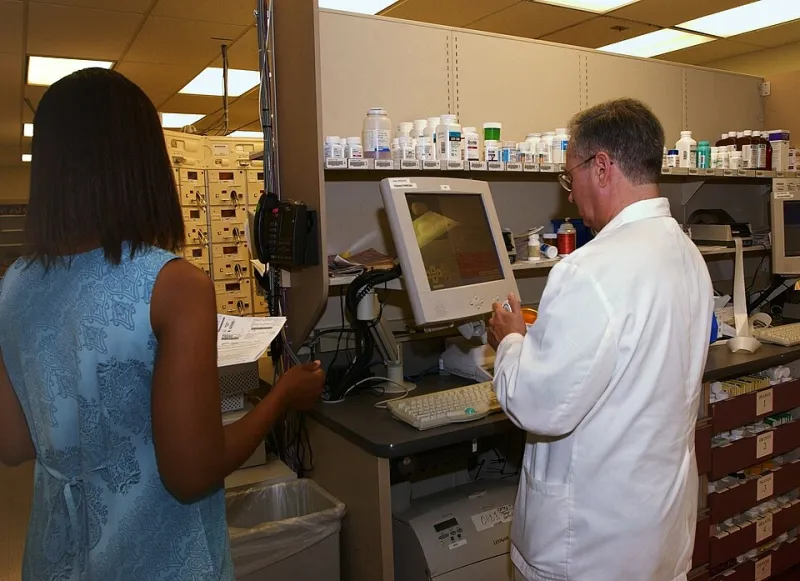
Pharmacies are not passive actors in this dynamic. When a PA is triggered, the pharmacy's dispensing software often surfaces an alternative — typically a therapeutically similar drug that the insurer has already placed on a preferred tier. The pharmacy benefits manager (PBM) contract structure can create subtle incentives for the pharmacy to suggest that alternative, because a completed transaction is more economically efficient than a pending one.
This is not necessarily a conspiracy. But patients should understand that when a pharmacy technician mentions that "there's another option your insurance will cover right away," the suggestion carries financial implications for multiple parties — not just the patient. The alternative may be clinically appropriate. It may also be a drug your physician specifically chose not to prescribe for documented reasons.
Tactics That Limit Your Financial Exposure
Navigating a PA without hemorrhaging money requires preparation and assertiveness at each stage of the process.
Request PA initiation before you leave the office. The most effective intervention happens at the point of prescribing. Ask your physician's staff to submit the prior authorization request while you are still at the appointment. Many practices have staff dedicated to this process, and initiating it immediately can shave days off the timeline.
Ask about a bridge supply. Some manufacturers of brand-name medications offer short-term free samples or bridge programs specifically designed for patients awaiting PA approval. Your prescribing physician's office is the best source for these — not the pharmacy.
Document every contact. Keep a written log of every call, fax confirmation, and pharmacy interaction. Insurance companies are required under federal law — and under many state laws — to meet specific turnaround deadlines for PA decisions. Standard reviews must typically be resolved within 72 hours; urgent reviews within 24 hours. If your insurer misses those windows, you have documented grounds for an expedited appeal.
Use your insurer's peer-to-peer review option. When a PA is denied, physicians can request a direct conversation with the insurance company's reviewing clinician. This step is underutilized, but it is often the fastest path to reversal. Encourage your doctor's office to pursue it rather than simply filing a written appeal.
Compare the cost of the alternative before agreeing. If the pharmacy or insurer suggests a covered alternative, do not assume it is cheaper in practice. Use a prescription price comparison tool to check the copay tier, any applicable quantity limits, and whether the alternative itself might trigger its own PA down the road.
The Systemic Cost Nobody Tallies
The prior authorization system imposes costs that are diffuse and therefore largely invisible. A patient who pays $85 for an emergency fill, $25 for an extra office visit, and $40 in transportation over the course of a two-week PA dispute has spent $150 that will appear in no insurance summary, no explanation of benefits, and no annual cost report. It simply disappears into the background noise of healthcare spending.
Being aware of that dynamic is the first step toward refusing to absorb it passively. The PA process has rules, timelines, and appeal mechanisms — and patients who learn to use them can significantly reduce the financial bleeding that delays are otherwise engineered to produce.