Same Chain, Starkly Different Prices: The Location Arbitrage Strategy That Can Slash Your Prescription Bill by 40 Percent or More
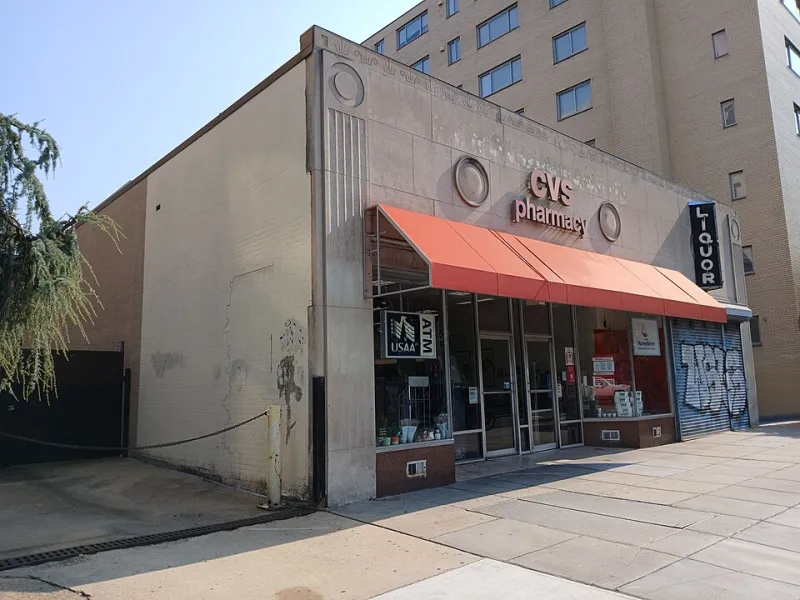
Photo: Ser Amantio di Nicolao, CC BY-SA 4.0, via Wikimedia Commons
When a shopper discovers that a gallon of milk costs more at one grocery store location than another branch of the same chain a few miles away, they simply drive to the cheaper store. Prescription medications, it turns out, operate by the same logic — yet almost no one acts on it. The result is a quiet, ongoing wealth transfer from patients who assume uniform pricing to a system that is, by design, anything but uniform.
Data compiled by independent pharmacy pricing researchers consistently shows price differentials of 30 to 60 percent for identical generic medications at different branches of the same national pharmacy chain, sometimes within the same metropolitan area. For a patient filling a 90-day supply of a common blood pressure medication, that gap can represent $80 to $150 in out-of-pocket costs — per fill cycle. Multiplied across a year and across multiple prescriptions, the financial exposure becomes significant.
Understanding why this happens — and how to systematically exploit the gap — is the subject of this guide.
Why the Same Chain Charges Different Prices at Different Locations
Pharmacy pricing is not set at the corporate level and broadcast uniformly to every store. Instead, large chains use dynamic, market-sensitive pricing models that factor in local competition density, neighborhood income demographics, the mix of insured versus cash-pay customers at that specific branch, and the presence or absence of nearby independent pharmacies or big-box competitors.
A branch located in an affluent suburb with limited nearby competition has little pricing pressure. A branch situated across the street from a Costco pharmacy or a high-volume independent operates in an entirely different competitive environment and frequently posts lower cash prices to retain customers. The corporate pricing algorithm registers these signals and adjusts accordingly — often without any visible indication at the counter.
Additionally, pharmacist discretion plays a larger role than most patients realize. In many chain pharmacy systems, individual pharmacists or store managers retain some authority to match competitor prices or apply discretionary discount codes. That authority is rarely advertised and almost never volunteered.
Building Your Price Intelligence Map
The first step in executing a location arbitrage strategy is generating a reliable price comparison across branches in your area. Several digital tools make this process considerably more efficient than calling pharmacies individually.
GoodRx and RxSaver both allow users to search prescription prices by zip code. Critically, these platforms often return different prices for the same chain at different location clusters — a direct reflection of the underlying market-based pricing variation. Search your medication using the zip codes of three to five branches of your preferred chain within a reasonable driving radius, and document the results in a simple spreadsheet.
The pharmacy chain's own website or app is a frequently overlooked resource. Several major chains now offer price-lookup tools that are location-specific. Entering different store numbers or zip codes can surface meaningful price differences that the chain does not proactively communicate.
Blink Health and Cost Plus Drugs (Mark Cuban's pharmacy platform) serve as useful external benchmarks. If a Cost Plus Drugs price for your medication is substantially lower than any nearby chain branch, that figure becomes powerful negotiating leverage — more on that below.
Once you have assembled price data across five to eight locations, identify the lowest-priced branch within a distance you consider acceptable. The next calculation is straightforward.
Calculating Whether the Drive Is Worth It
A 40 percent price reduction sounds compelling in the abstract, but the practical calculus depends on the absolute dollar amounts involved. A 40 percent saving on a $12 prescription yields $4.80 — almost certainly not worth a 20-minute round trip. The same percentage reduction on a $180 prescription yields $72, which most patients would consider a reasonable trade for the inconvenience.
Apply this framework before committing to a location switch:
- Determine your monthly or quarterly fill cost at your current branch.
- Identify the lowest price at an alternative branch of the same chain.
- Calculate the annualized savings — multiply the per-fill difference by the number of fills per year.
- Subtract your travel cost estimate — the IRS standard mileage rate of 67 cents per mile (as of 2024) is a reasonable proxy for personal vehicle costs.
- If the net annual saving exceeds $50, the switch is almost certainly financially justified for a regularly filled maintenance medication.
For patients who fill multiple prescriptions, the calculation compounds quickly. A household managing three or four chronic condition medications could realize $400 to $800 in annual savings by consistently using the lower-priced branch.
The Negotiation Playbook: Using Price Intelligence Without Switching Locations
For patients with mobility constraints, irregular schedules, or strong relationships with their current pharmacy staff, an in-person location switch may not be practical. The alternative is to use your price intelligence data as negotiating leverage at your existing branch.
This approach is less commonly known but well-documented by consumer advocates. Here is how to execute it effectively:
Step one: Confirm the lower price at the competing branch before approaching your pharmacist. Print or screenshot the price from GoodRx, the chain's own website, or a competitor platform.
Step two: At the pharmacy counter — ideally during a slower period, not during peak morning or evening rush — politely inform the pharmacist that you have identified a lower cash price for the same medication at another branch of the same chain. Present your documentation.
Step three: Ask directly whether the pharmacy can match that price or apply a discount code that brings your cost closer to the documented figure. Phrase the request collaboratively rather than confrontationally: "I'd prefer to keep filling here — is there anything you're able to do on the price?"
Step four: If the pharmacist indicates they lack the authority to adjust pricing, ask whether a store manager or pharmacy manager can review the request. Escalation is appropriate and not unusual in this context.
Industry insiders note that many chain pharmacy systems include override codes that staff can apply to reduce prices for cash-pay customers, particularly when a documented lower price exists nearby. These codes are not advertised because applying them reduces revenue. They exist because retaining a customer at a lower margin is preferable to losing that customer entirely.
Important Caveats for Insured Patients
The location arbitrage strategy described here applies primarily to cash-pay transactions — situations where you are paying out of pocket rather than routing the claim through insurance. If your insurance plan covers a medication and your copay is fixed regardless of the underlying drug price, the location price difference may not affect what you personally pay at the counter.
However, insured patients are not entirely excluded from this strategy. Patients who have not yet met their annual deductible pay the full negotiated rate, which does vary by location and plan. Additionally, patients who use manufacturer coupons or third-party discount cards in lieu of insurance — a legitimate and sometimes financially superior approach for certain generics — will benefit directly from lower cash prices at any location.
Always verify whether your specific insurance arrangement makes you a cash-pay patient in practice before investing time in price comparison research.
The Broader Principle: Treating Prescription Costs as Negotiable
The most consequential shift in thinking this article can prompt is a simple one: prescription prices are not fixed, immutable facts. They are outputs of a pricing system that responds to competition, market signals, and — when patients are informed enough to apply it — direct consumer pressure.
Chain pharmacy pricing variation across locations is not an anomaly or a glitch. It is a structural feature of how these businesses operate. Patients who recognize this and respond systematically — using digital price tools, running straightforward savings calculations, and engaging pharmacists as negotiating counterparts rather than passive order-fillers — consistently pay less for the same medications than those who do not.
The 40 percent savings figure cited in the research on intra-chain price variation is not guaranteed in every market or for every drug. But for a meaningful subset of commonly prescribed generics, that gap exists, it is documented, and it is accessible to any patient willing to spend 15 minutes with a price comparison tool before their next refill.
At Rx Price Watch, our consistent finding is that the most powerful cost-reduction tool available to US prescription consumers is not a government program or a coupon app — it is informed, active engagement with a pricing system that rewards those who understand it and quietly penalizes those who do not.