The Prescription Price Clock: How Short-Term Pharmacy Rate Shifts Can Save — or Cost — You Hundreds
Most Americans treat the pharmacy counter as a fixed transaction: a prescription is presented, a price is quoted, and a payment is made. The assumption underlying this routine is that drug prices are stable — that the number on the register today will be the same number tomorrow, or next week. That assumption is frequently wrong.
Pharmacy pricing for many common medications can shift meaningfully within windows as narrow as 24 to 72 hours. For patients paying out of pocket, or those whose insurance deductibles leave them exposed to full retail pricing, these fluctuations are not a minor inconvenience. They represent real money — sometimes hundreds of dollars on a single fill.
Understanding why this happens, which drugs are most susceptible, and how to position yourself to benefit rather than absorb the cost is one of the more underutilized tools in the modern prescription consumer's arsenal.
Why Pharmacy Prices Fluctuate in the First Place
To understand short-term price movement at the pharmacy level, it helps to understand the supply chain sitting behind it. Pharmacy benefit managers (PBMs) — the intermediaries who negotiate drug pricing between manufacturers, insurers, and retail pharmacies — update their reimbursement schedules on a rolling basis. Pharmacies, in turn, adjust their cash and third-party prices to reflect these changes.
Additionally, third-party discount programs such as GoodRx, RxSaver, and NeedyMeds pull pricing data from pharmacy networks continuously. When a manufacturer adjusts a wholesale acquisition cost, when a generic competitor enters the market, or when a PBM renegotiates a contract, those downstream pricing signals ripple through to the comparison tools consumers use — often within 48 to 72 hours.
For brand-name medications, pricing tends to be more stable in the short term, anchored by manufacturer list prices. Generic drugs, however, are far more volatile. Because multiple manufacturers compete for market share in the generic space, pricing can shift rapidly in response to supply disruptions, new market entrants, or changes in purchasing agreements between wholesalers and pharmacy chains.
Which Medications Are Most Prone to Short-Term Price Movement
Not every drug on your prescription list is equally susceptible to rapid price changes. The medications most likely to exhibit meaningful short-term volatility share a few common characteristics.
Generic medications with multiple manufacturers are the most volatile category. Drugs like metformin, lisinopril, atorvastatin, and common antibiotics such as amoxicillin or doxycycline can see price swings of 20 to 40 percent over a matter of days when generic competition intensifies or a supplier temporarily exits the market.
Medications recently transitioned from brand to generic often experience the most dramatic short-term pricing instability. In the months immediately following a patent expiration, pricing can be erratic as the market finds equilibrium between the original brand, authorized generics, and independent generic manufacturers.
Specialty-adjacent medications — particularly those in categories like diabetes management, mental health, and cardiovascular treatment — also show notable volatility due to frequent PBM formulary adjustments and manufacturer rebate renegotiations.
How to Monitor Prices Before Committing to a Fill
The single most actionable step any prescription consumer can take is to decouple the act of receiving a prescription from the act of filling it. A prescription, once written, does not expire immediately. In most states, non-controlled medications carry a validity window of 12 months. That window is an opportunity.
Use comparison tools as a monitoring instrument, not just a one-time lookup. Platforms like GoodRx and RxSaver allow you to search a specific drug, dosage, and quantity and observe prices across multiple pharmacies in your area. Returning to those same searches on different days — particularly if you have flexibility in your fill timing — can reveal whether a price has moved.
Check prices at multiple pharmacy types simultaneously. Independent pharmacies, big-box retailers like Costco and Walmart, and national chains such as CVS and Walgreens often update their pricing systems on different schedules. A price that appears elevated at a chain pharmacy on Monday may reflect a lag in updating a recently reduced acquisition cost — while an independent pharmacy or warehouse club may already reflect the lower rate.
Ask your prescriber about a short fill. If you are starting a new medication and prices appear to be in flux, requesting a smaller initial supply — a 15- or 30-day fill rather than a 90-day supply — limits your financial exposure while you observe whether pricing stabilizes or declines. This is particularly relevant for recently genericized drugs.
The Role of Discount Coupon Platforms in Price Timing
Discount platforms do not simply display existing pharmacy prices — they actively negotiate group pricing on behalf of their users. When a platform's negotiated rate with a specific pharmacy chain is renegotiated, the new pricing can appear in the platform's database before it is widely publicized. Checking the same medication across multiple discount platforms simultaneously, rather than relying on a single source, often reveals meaningful discrepancies.
It is also worth noting that some platforms update their pharmacy-specific pricing more frequently than others. Anecdotal reports from cost-conscious consumers and patient advocacy communities suggest that certain platforms refresh their pricing data daily, while others operate on weekly or biweekly cycles. The practical implication: a price quote obtained from a comparison tool today may not reflect the most current negotiated rate available at that same pharmacy.
What the Pharmacist Can — and Cannot — Tell You
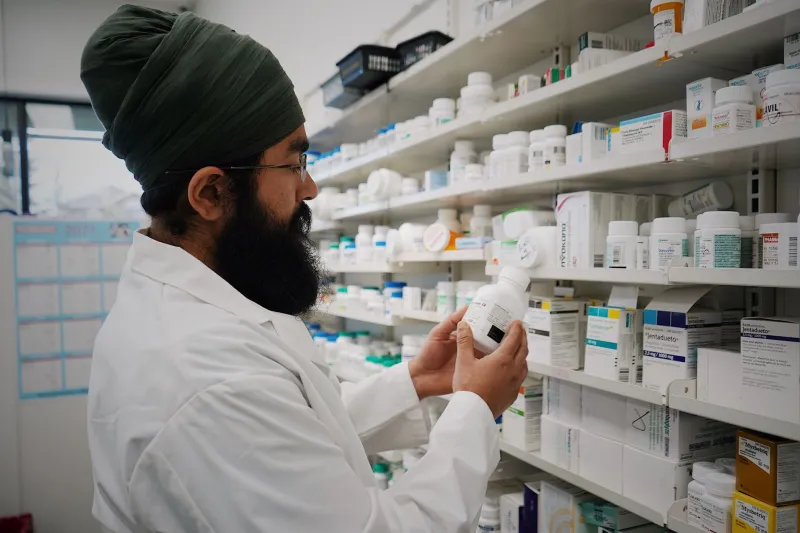
Pharmacists are often more forthcoming about pricing dynamics than patients expect, though their ability to influence pricing is limited. A pharmacist can confirm whether a drug's price has changed recently in their system, whether a generic equivalent has recently become available, and whether their pharmacy participates in a specific discount program. What they generally cannot do is hold a quoted price for a future date or guarantee that today's rate will apply when you return.
Some independent pharmacies, however, offer more flexibility. Because they operate outside the rigid pricing structures of large chains, independent pharmacists may have greater discretion to match a competitor's quoted price or apply a discount for established patients. If you are a regular customer at an independent pharmacy and you have documentation of a lower price elsewhere, it is worth raising the question directly.
Building a Practical Timing Strategy
For most consumers, the practical application of price-timing principles does not require daily monitoring or elaborate spreadsheets. A few straightforward habits can capture much of the available benefit.
First, check prices on at least two separate days before filling any prescription that costs more than $50 out of pocket. Second, use multiple comparison platforms rather than relying on a single source. Third, for ongoing maintenance medications, set a calendar reminder to re-check pricing every 60 to 90 days — particularly for generics, where market conditions shift more frequently.
Finally, recognize that the pharmacies with the most aggressive pricing on a given drug may change over time. The chain that offered the lowest price on your blood pressure medication six months ago may not hold that position today. Periodic comparison shopping — even for medications you fill routinely — is not a one-time exercise. It is an ongoing practice.
The Bottom Line
Pharmacy pricing is a dynamic system, not a static one. The consumers who treat it as fixed are, in effect, subsidizing those who treat it as negotiable. Short-term price monitoring requires modest effort but can yield disproportionate savings — particularly for patients managing multiple prescriptions or absorbing the full cost of a high-priced generic. At Rx Price Watch, the guiding principle is straightforward: the best prescription price is the one you actively sought, not the one you passively accepted.