The $4 Benchmark: Why Walmart's Generic Drug List Should Be Every Consumer's First Stop Before Filling Anywhere
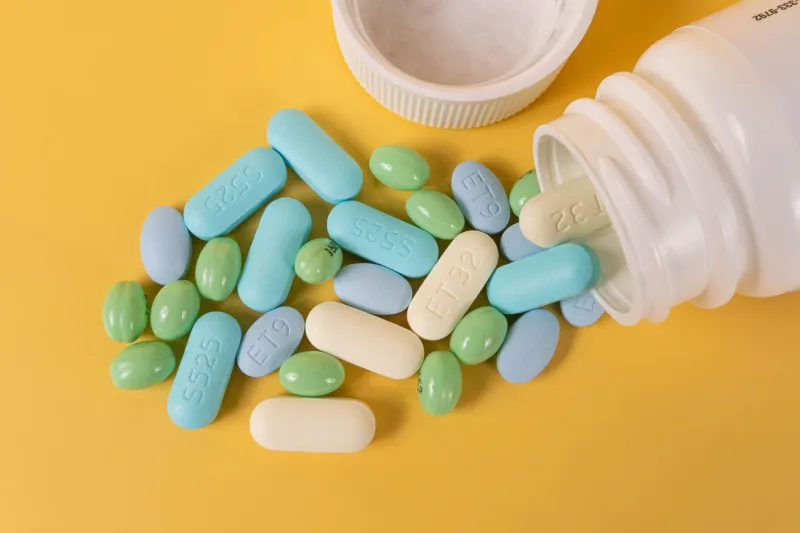
When Walmart launched its $4 generic prescription program in 2006, the retail pharmacy industry did not immediately applaud. Competing chains scrambled, insurers recalibrated, and consumers—many of whom had been paying multiples of that amount for identical molecules—began asking uncomfortable questions at pharmacy counters across the country. Nearly two decades later, the program's influence has not faded. If anything, it has become more structurally important as drug prices continue to climb and insurance coverage grows increasingly unpredictable.
For the health-conscious American consumer trying to manage out-of-pocket prescription expenses, Walmart's list is not merely a discount at one retailer. It is a price floor—a documented, publicly available benchmark against which every other pharmacy's charges can and should be measured.
What the Program Actually Covers
Walmart's $4 generic list includes hundreds of commonly prescribed medications across a wide range of therapeutic categories. Antibiotics, blood pressure medications, cholesterol-lowering statins, diabetes management drugs, thyroid treatments, antidepressants, and several mental health medications appear regularly on the list. The $4 price point applies to a standard 30-day supply, with a $10 option typically available for a 90-day fill on qualifying drugs.
It is worth noting that the list is not static. Walmart updates its included medications periodically, adding newly genericized drugs and occasionally removing others. Consumers who checked the list six months ago may find it has expanded to cover a medication they recently started taking. Revisiting the list at each refill cycle is a practical habit rather than an optional one.
The program applies to cash-pay transactions, meaning it operates independently of insurance. For patients with high-deductible health plans who are still working toward their annual deductible, or for the roughly 25 to 30 million Americans who remain uninsured, the practical relevance is immediate and substantial.
Why the List Matters Even If You Never Visit Walmart
Here is the counterintuitive insight that many consumers miss: Walmart's $4 list is useful even for people who have no intention of filling prescriptions there. The reason is straightforward. When a documented, publicly accessible price for a specific generic medication exists at a major national retailer, that price becomes a negotiating reference point.
Pharmacies—including large chains—do not operate on fixed, immovable margins. Prices at the counter reflect a combination of acquisition costs, dispensing fees, and the assumption that most customers will not comparison shop. When a consumer walks in with documented evidence that an identical generic is available for $4 at a competitor, the dynamic shifts. Some pharmacies will match or approach that price rather than lose the transaction. Others have internal price-match policies that are not advertised but are available upon request.
Even without an explicit price-match conversation, knowing the Walmart benchmark prevents a different kind of harm: the quiet overpayment that occurs when a consumer simply accepts the first price quoted. A 30-day supply of metformin, lisinopril, or simvastatin priced at $18 or $22 at another chain is not a reasonable charge when the same drug is documented at $4 elsewhere. That gap—multiplied across multiple medications and twelve fill cycles per year—can represent hundreds of dollars in unnecessary annual spending.
How to Use the List Strategically
Accessing Walmart's current generic price list requires nothing more than a visit to the pharmacy section of Walmart's website. The list is publicly available and searchable by drug name. Before filling any generic prescription, the recommended process is as follows.
First, confirm whether your medication appears on the Walmart list. If it does, record the exact price for the supply quantity you need. Second, obtain a cash-pay price quote from your current pharmacy for the same drug and quantity. Most pharmacies will provide this over the phone. Third, compare the two figures. If the gap is meaningful—and it frequently is—you have several options: fill at Walmart, request a price match at your current pharmacy, or use a third-party discount card to bring the price closer to the benchmark.
Third-party tools such as GoodRx, RxSaver, and NeedyMeds often produce prices competitive with or lower than Walmart's list for certain medications in certain markets. The Walmart benchmark, however, provides a reliable floor when those tools produce inconsistent results.
The Competitive Pressure the List Created
Target, Kroger, Publix, and several regional grocery chains introduced their own $4 or even free generic programs in response to Walmart's move. Publix, for instance, offers a well-known free antibiotic program. Kroger has maintained a $4 generic list for years across its pharmacy locations. These programs exist, at least in part, because Walmart forced the conversation.
This competitive legacy means that consumers in many markets have access to multiple low-cost generic programs simultaneously. The optimal strategy is not to default to any single program but to check which program covers a given medication at the lowest price for that specific fill.
The Limits of the $4 Model
The program has meaningful constraints worth acknowledging. Brand-name medications are not included. Specialty drugs—biologics, certain oncology medications, newer diabetes treatments—fall entirely outside its scope. Some newer generics that have only recently lost patent protection may not yet appear on the list, even when generic versions are technically available.
Additionally, for patients whose insurance covers generic medications at a $0 or low-tier copay, the $4 cash price may offer no advantage. In those cases, the insurance benefit is clearly superior. The Walmart list is most relevant for uninsured patients, underinsured patients, and those in high-deductible situations.
A Price Anchor in an Opaque Market
Prescription drug pricing in the United States is notoriously opaque. List prices, net prices, negotiated rates, and cash-pay prices can differ dramatically for the same product at the same location on the same day. In that environment, any publicly documented, consistently maintained price reference carries outsized value.
Walmart's $4 list is imperfect and incomplete. But as a starting point—a price anchor that reframes what consumers should reasonably expect to pay for common generics—it remains one of the most accessible and underutilized tools in the American prescription shopper's arsenal. Check it first. Every time.