Price-Match Policies at the Pharmacy Counter: The Unadvertised Guarantee That Could Recover Hundreds on Your Next Prescription
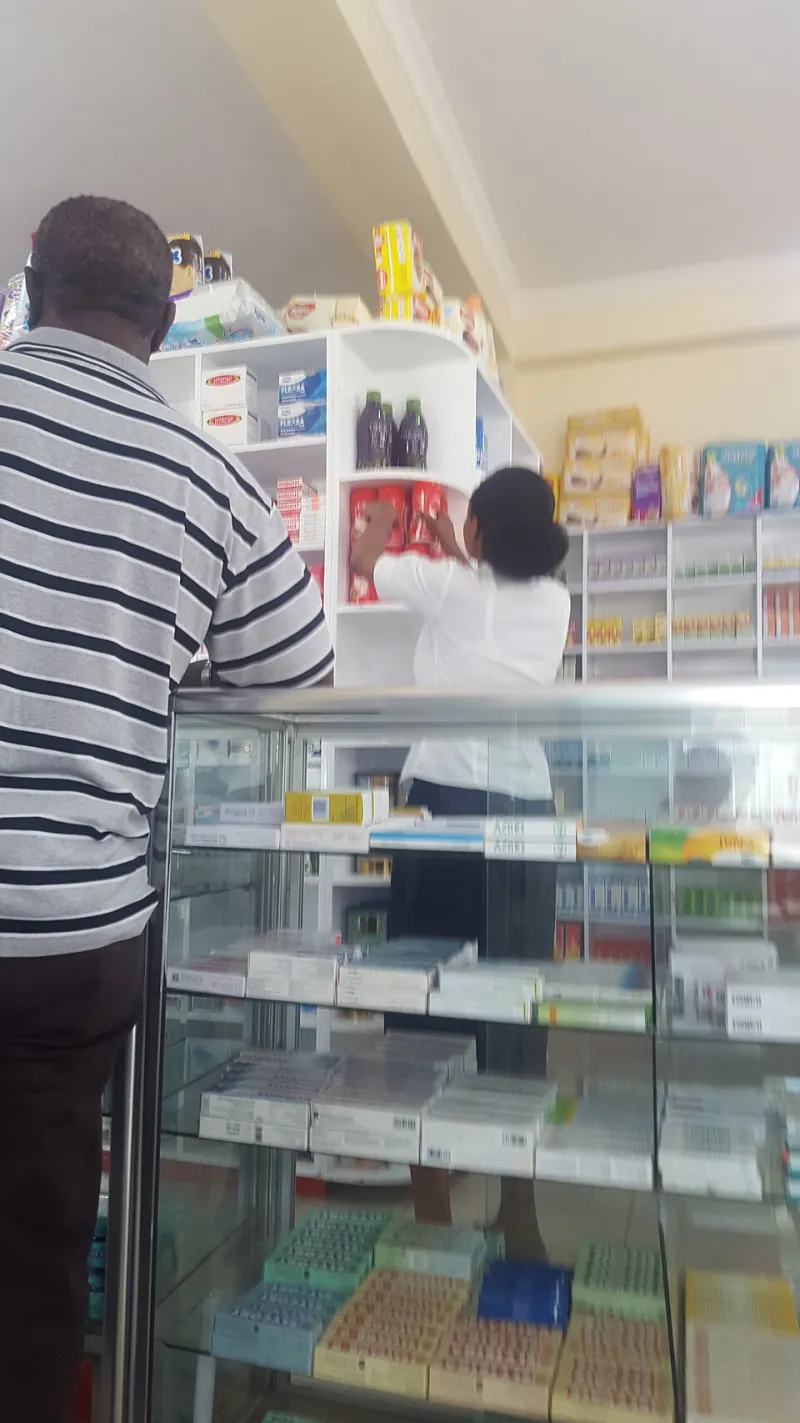
Photo: Akeeb Feroz, CC BY-SA 4.0, via Wikimedia Commons
When a consumer walks into a big-box retailer to buy a television, price-matching is practically a given. Signage announces it. Staff volunteer it. Competitors' ads are accepted without question. At the pharmacy counter, however, a structurally similar practice exists in a far more opaque form — one that chains rarely advertise, staff seldom mention, and most patients never discover until they've already overpaid for years.
This is the pharmacy price-match guarantee: a policy that, when properly invoked, can align what you pay at one retailer with the lower price documented at another. The mechanics vary considerably by chain, and the eligibility conditions contain enough fine print to frustrate even motivated shoppers. But for consumers willing to do a modest amount of research before arriving at the counter, the financial upside can be substantial.
Which Major Chains Maintain Price-Match Policies — and What They Actually Cover
Not every large pharmacy in the United States maintains a formal price-match policy, and among those that do, the scope differs in meaningful ways.
Walmart Pharmacy has historically offered one of the more straightforward approaches. The retailer's $4 and $10 generic drug lists have long been benchmarks in the industry, but Walmart has also demonstrated willingness to match verified competitor pricing on a broader range of generics when customers present documentation. Because Walmart's pharmacy operates as an extension of its general retail model — where price competition is a core brand value — staff tend to be more familiar with the concept than their counterparts at standalone pharmacy chains.
Costco Pharmacy presents a different dynamic. Membership-based pricing already positions Costco among the lowest-cost options for many generics, but the warehouse model means price-match requests against outside retailers are handled inconsistently. Some members report success; others are told the policy doesn't apply to prescription medications. The lack of standardized national guidance creates a situation where outcomes depend heavily on individual store management.
Kroger-affiliated pharmacies, including those operating under regional banners such as Fry's, Ralphs, and Smith's, maintain price-adjustment practices that vary by region. Kroger's loyalty ecosystem adds a layer of complexity: pricing can shift based on whether a customer is using a Kroger Plus card, a third-party discount card, or insurance.
CVS and Walgreens, the two dominant standalone pharmacy chains in the US, do not maintain broadly publicized price-match programs in the traditional retail sense. However, both chains have customer retention tools — including price overrides, manager discretion adjustments, and their own discount card programs — that function similarly in practice. Customers who escalate requests beyond the front-line staff have documented success in securing price adjustments that mirror competitor quotes.
The Documentation Requirement: Why Most Consumers Fail Before They Start
The central obstacle in executing a pharmacy price-match request is documentation. Unlike retail electronics, where a competitor's website URL often suffices, pharmacies typically require a verifiable price from a specific source — and not all sources qualify.
Prices obtained from GoodRx, RxSaver, or similar third-party discount platforms may or may not be accepted depending on the pharmacy's internal policy. Some chains treat these prices as legitimate competitor quotes; others classify them as coupon programs and reject them outright. The distinction matters enormously because GoodRx prices at a competing pharmacy are often the most dramatic discounts available in any given market.
The most consistently accepted documentation tends to be a printed or digital quote from a competitor pharmacy's own website, a verified cash price from a warehouse club pharmacy, or a written estimate from a mail-order pharmacy. Calling a competing pharmacy and recording the quoted cash price — then presenting that information at the counter — has worked for some consumers, though staff responses vary.
The practical recommendation is to arrive prepared. Before filling any prescription, spend five minutes on a price comparison platform to identify the lowest verified cash price within a reasonable geographic radius. Screenshot it. Note the pharmacy name, address, and the specific drug, dosage, and quantity. That documentation transforms a vague request into a concrete, difficult-to-dismiss ask.
What the Fine Print Excludes — and Why It Matters
Price-match policies in pharmacy retail carry exclusions that can disqualify a significant portion of otherwise eligible prescriptions.
Controlled substances are almost universally excluded. Schedule II through Schedule IV medications — which include stimulants, opioids, benzodiazepines, and certain sleep aids — fall outside the scope of price-match guarantees at virtually every chain that maintains them. This is partly a regulatory matter and partly a risk-management decision by the pharmacy.
Insurance-adjudicated claims represent another exclusion zone. Price-match guarantees, where they exist, apply to cash-pay transactions. If your insurance plan is processing the claim, the negotiated rate between the insurer and the pharmacy governs the final price, and a price-match request is irrelevant. This means the strategy is most valuable for patients paying out of pocket — either because they're uninsured, because a cash price is lower than their copay, or because a particular medication isn't covered under their plan.
Specialty medications are also typically excluded. Biologics, injectables, and high-cost specialty drugs are priced through entirely different channels, often involving specialty pharmacy networks, manufacturer hub programs, and prior authorization processes that don't intersect with standard retail price-matching.
Real-World Outcomes: When the System Works
Consumer accounts documented across healthcare advocacy forums and patient community boards reveal a consistent pattern: patients who approach the request professionally, with documentation in hand and a clear understanding of what they're asking, succeed at a meaningfully higher rate than those who arrive unprepared.
One recurring example involves common generic medications — metformin, lisinopril, atorvastatin — where cash prices at warehouse clubs like Costco or Sam's Club Pharmacy run significantly below what chain pharmacies charge without a discount card. Patients who obtain a verified Costco cash price and present it at a competing chain have reported price adjustments ranging from 30 to 60 percent on a single fill. Across a year of monthly refills, that difference compounds into hundreds of dollars.
Another documented pattern involves GoodRx-listed prices at a competitor's location. Even in cases where a pharmacy's formal policy doesn't recognize third-party coupon platforms as valid comparators, a supervisor-level conversation that references the specific competitor pharmacy — rather than the GoodRx platform itself — has resolved in the customer's favor in a notable share of cases.
Turning a One-Time Win Into a Systematic Advantage
The most financially effective approach treats price-matching not as a last resort but as a routine step in the prescription-filling process. Building a habit of checking cash prices before every fill — using a comparison tool, identifying the market low, and either filling at the cheaper location or requesting a match at your preferred pharmacy — eliminates the passive overpayment that characterizes most Americans' prescription spending.
It also helps to establish a relationship with a specific pharmacist or pharmacy manager. Staff who recognize a customer as informed and consistent in their approach are more likely to accommodate price-adjustment requests without escalation.
For consumers managing multiple chronic medications, the cumulative impact of systematic price comparison and selective price-match requests can exceed $500 to $1,000 annually — a figure that rivals the value of many discount card programs, without requiring enrollment, membership fees, or plan changes.
The pharmacy counter has never been designed to make cost comparison easy. But the tools to reclaim that advantage exist, and they require nothing more than a few minutes of research and the willingness to ask a direct question.